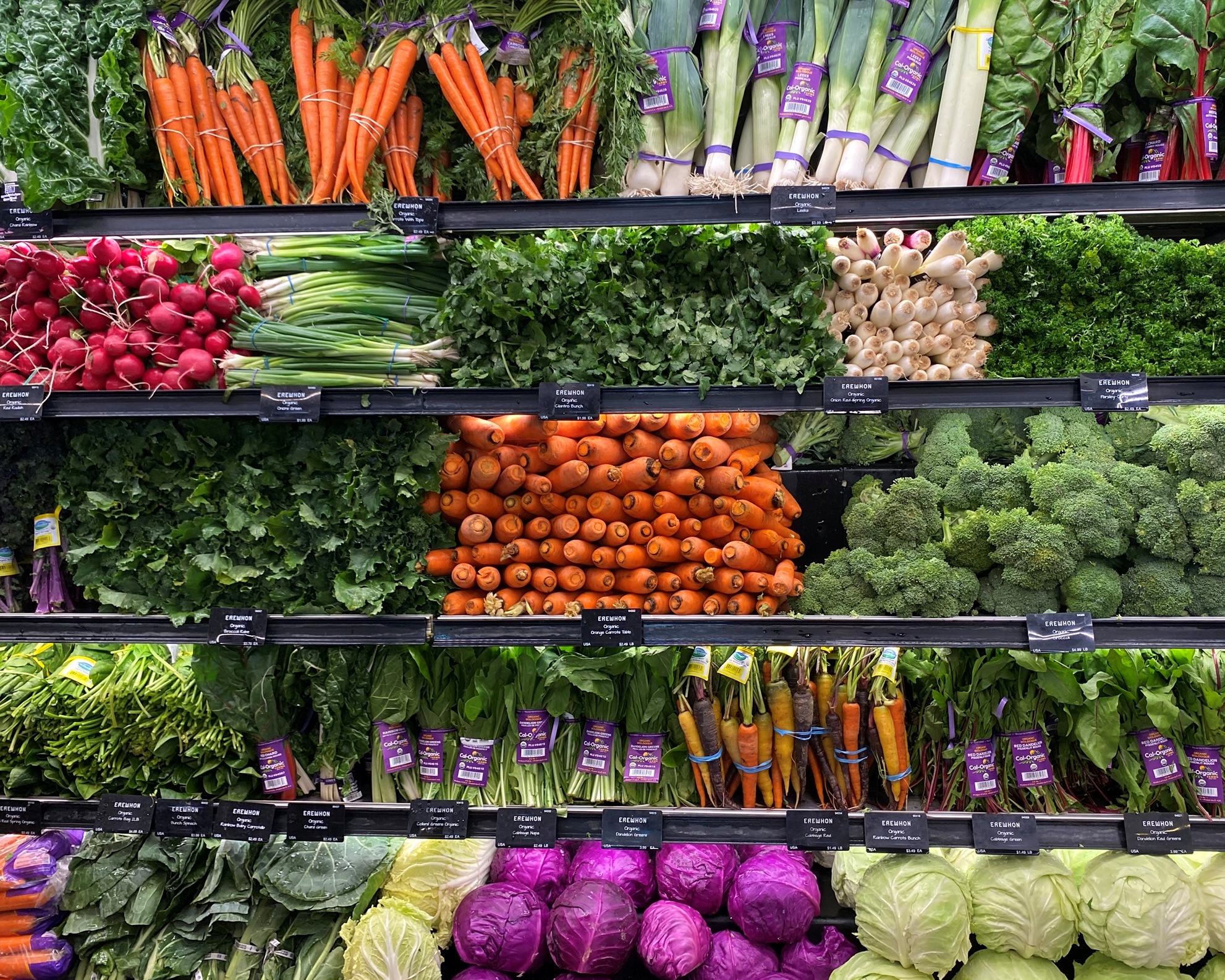
I love theoretical debates, and PubMed is a wonderland of fascinating articles. In practice, though, I find myself leaning toward visual, down‑to‑earth advice that patients can apply intuitively.
Mediterranean diet – great inspiration, theoretically the healthiest diet in the world and the MedDiet pyramid is a very helpful guideline. However, I think that in everyday life, we need something even more concrete, and a healthy eating plate comes in handy.
There are no studies per se proving that eating this way is related to a longer lifespan, but many studies are proving its impact on a longer healthspan through prevention of nutrition-related diseases.
Harvard Eating Plate has been based on the Healthy Eating Index from 1995, which was a typical portion-oriented approach (U.S. Department of Agriculture, Center for Nutrition Policy and Promotion, 1995). This original index consisted of ten equally weighted components: grains, vegetables, fruit, milk, meat, total fat, saturated fat, cholesterol, sodium and dietary variety. The first five measured whether recommended numbers of servings were met, while the remaining five focused on nutrients to limit and dietary variety.
As of today (August 2026), the latest official version of the Healthy Eating Index (HEI) is still HEI-2020. (Shams-White et al., 2023). One of the biggest methodological improvements over the years was changing from servings per day to intake per 1,000 kcal. This density-based approach was introduced with HEI-2005 and retained until the present day. The modern version contains 13 components divided into adequacy and moderation (limit) categories. In the adequacy category, there are total fruits, whole fruits, total vegetables, greens and beans, whole grains, dairy, total protein foods, seafood and plant proteins, and fatty acids ratio. In the moderation category: refined grains, sodium, added sugars and saturated fats. In this context, the term “total” refers to the overall intake of all foods belonging to a given food group, for example: total fruits refers to whole fruits, juice and other processed forms.
Harvard Eating Plate, created in 2011, is a wonderful tool in everyday practice with a variety of patients internationally (Harvard T.H. Chan School of Public Health, 2023). It represents an excellent template for introductory conversations with patients about healthy eating habits.
Fruit & Vegetables
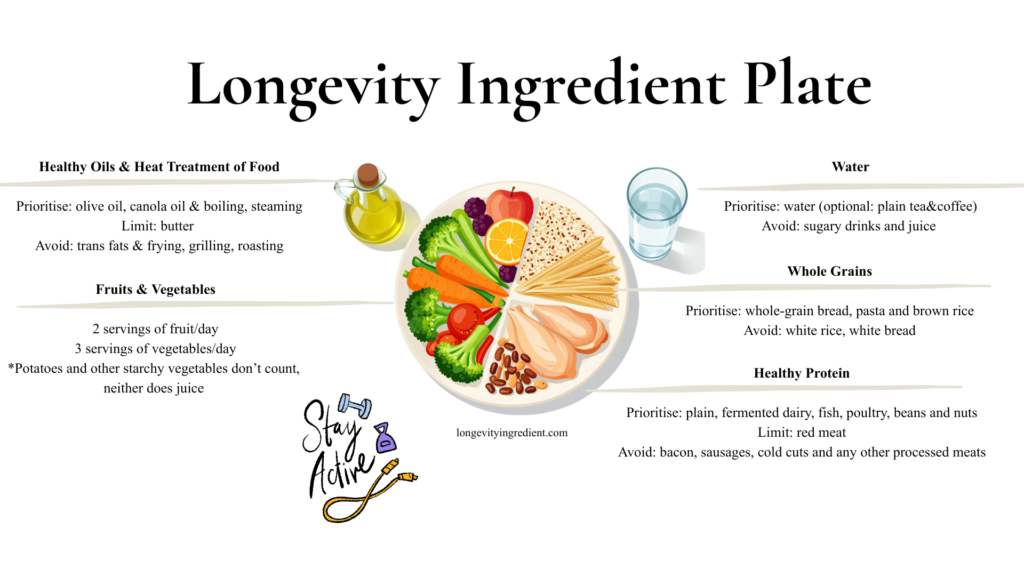
In a meta-analysis including 1.89 million participants, the researchers concluded that consuming approximately five daily servings of fruits and vegetables was associated with the lowest risk of premature death. The optimal intake consisted of two servings of fruit and three servings of vegetables per day. While most fruits and vegetables were associated with lower mortality, starchy vegetables, potatoes, and fruit juice were not associated with reduced mortality (Wang et al., 2021).
It’s crucial to stress the importance of cleaning to remove any remaining pesticides and heavy metals, and of eating organic produce when possible.
Healthy Oils
As mentioned in the article about added sugar, boiling and steaming should be the most common way of heat-treating food. Avoid frying, grilling, and roasting. Olive oil and canola oil should be prioritised for cooking purposes. Butter should be consumed in limited amounts, whereas trans fats should be avoided altogether.
Water
Drink lots of fresh, plain water (around 1.5-2 litres (6-9 cups) per day)!
If coffee and tea are part of your routine, drink them plain (without added sugar or milk). Don’t drink them as the company of your nutritious meal. Drinking coffee or tea with a meal significantly reduces non-heme iron absorption (by 39% and 64%, respectively), whereas drinking coffee 1 hour before a meal doesn’t have this type of effect. On the other hand, when consuming it 1 hour after a meal, it still impairs iron absorption (Morck et al., 1983). So to be safe, choose to have your cup of tea or coffee at least one hour before the meal.
Avoid sugary drinks, but equally avoid drinking juice altogether.
Contrary to the Harvard Plate authors, I would place milk/dairy in the category of Healthy Protein…
Healthy Protein
Dairy products should be included in a healthy diet up to three servings per day. Prioritise plain, fermented dairy products such as natural yoghurt (4–5 g protein/100 g), skyr (10–11 g protein/100 g), kefir (3–4 g protein/100 g), and buttermilk (3–3.5 g protein/100 mL), as they provide high-quality protein and beneficial bacteria that support gut health. Skyr is particularly rich in protein, making it an excellent choice for satiety and muscle maintenance.
Limit milk, as it contains relatively less protein (about 3–3.5 g/100 mL) but, more importantly, doesn’t provide as much benefit to microbiota as other fermented dairy products do. Cream should be consumed sparingly due to its high fat content. Cheese can also be high in saturated fat, although there are healthier exceptions, such as cottage cheese (around 11 g protein/100 g) and fromage blanc (7–8 g protein/100 g), which are high in protein and relatively low in fat.
According to The French Rheumatology Society and the Osteoporosis Research and Information Group, 3 servings of plain, fermented dairy are a crucial part of a nutritional approach to osteoporosis prevention. For that reason, I have to admit that while I agree with limiting, and even avoiding, drinking milk, I wouldn’t put milk on the same level as other dairy products, and recommend limiting their intake to 2 servings a day.
Remaining information placed on Harvard Plate goes as follows: choose fish, lean meat, like poultry, beans and nuts (also full of healthy oils and fibre). Limit red meat and avoid all processed meats like bacon, cold cuts, sausages, etc.
Whole Grains
Whole grains (for example: whole-grain pasta, bread, and brown rice) should be the preferred source of carbohydrates because they are richer in fibre, vitamins, minerals, and other beneficial compounds than refined grains (for example: white bread, white rice).
One of the biggest meta-analyses on the subject suggests that high intake of whole grains is associated with reduced risk of cardiovascular disease, cancer, and all-cause mortality. Reductions in risk were observed up to an intake of 7 to 7.5 servings/day (210-225 g/day) (Aune et al., 2016).
Stay Active!
Last but not least, physical activity is so important! There are so many benefits of regular, moderate physical activity that this topic definitely deserves a separate article.
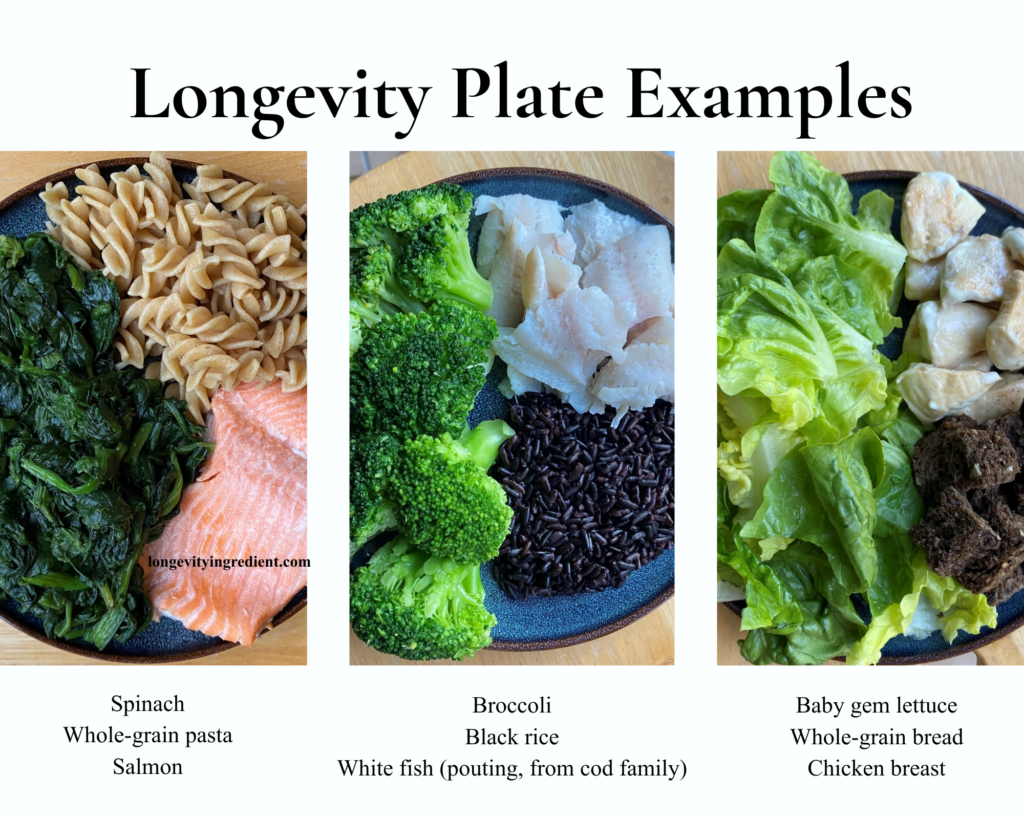
Healthy eating doesn’t have to be complicated. Use these plates as inspiration – not recipes to follow exactly. Aim to fill half of your plate with vegetables (or fruits), a quality protein source, and whole-grain carbohydrates. Mix and match ingredients based on what you enjoy and have on hand, adjusting portions to suit your nutritional needs.
Reference
U.S. Department of Agriculture, Center for Nutrition Policy and Promotion. The Healthy Eating Index. Washington (DC): U.S. Department of Agriculture; 1995.
Shams-White MM, Pannucci TE, Lerman JL, Herrick KA, Zimmer M, Meyers Mathieu K, Stoody EE, Reedy J. Healthy Eating Index-2020: Review and Update Process to Reflect the Dietary Guidelines for Americans,2020-2025. J Acad Nutr Diet. 2023 Sep;123(9):1280-1288. doi: 10.1016/j.jand.2023.05.015. Epub 2023 May 16. PMID: 37201748; PMCID: PMC10524328.
Harvard T.H. Chan School of Public Health. Healthy Eating Plate. The Nutrition Source; 2023 [cited 2026 Aug 1]. Available from: https://nutritionsource.hsph.harvard.edu/healthy-eating-plate/
Wang DD, Li Y, Bhupathiraju SN, Rosner BA, Sun Q, Giovannucci EL, Rimm EB, Manson JE, Willett WC, Stampfer MJ, Hu FB. Fruit and Vegetable Intake and Mortality: Results From 2 Prospective Cohort Studies of US Men and Women and a Meta-Analysis of 26 Cohort Studies. Circulation. 2021 Apr 27;143(17):1642-1654. doi: 10.1161/CIRCULATIONAHA.120.048996. Epub 2021 Mar 1. PMID: 33641343; PMCID: PMC8084888.
Morck TA, Lynch SR, Cook JD. Inhibition of food iron absorption by coffee. American Journal of Clinical Nutrition. 1983;37(3):416–420.
Aune D, Keum N, Giovannucci E, et al. Whole grain consumption and risk of cardiovascular disease, cancer, and all cause and cause specific mortality: systematic review and dose-response meta-analysis of prospective studies. BMJ. 2016;353:i2716.







Be First to Comment